
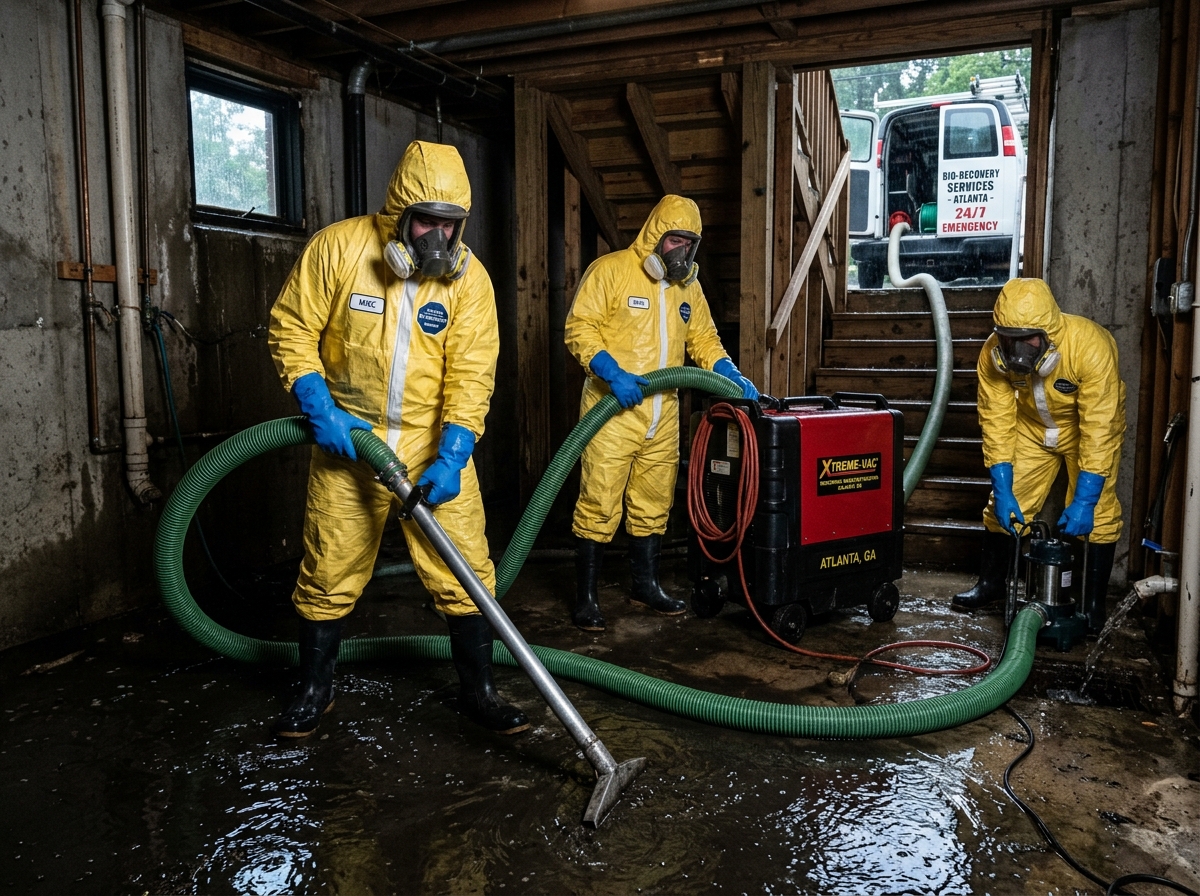
A Professional Guide to Atlanta Biohazard and Sewage Remediation
Understanding Biohazard Sewage Cleanup in Atlanta
When we talk about biohazard sewage cleanup Atlanta residents often face, we are discussing the remediation of "Blackwater." In the restoration industry, water is categorized by its level of contamination. Category 1 is clean water (like a burst supply pipe), and Category 2 is "greywater" (like a washing machine overflow). However, sewage is strictly Category 3.
Category 3 water is grossly contaminated. It contains pathogenic, toxigenic, or other harmful agents. In Atlanta, our unique infrastructure challenges often turn a simple plumbing issue into a major biohazard event. The city’s combined sewer systems, in certain older neighborhoods, are designed to carry both muddy stormwater and raw sewage. During the heavy downpours common in Georgia, these systems can become overwhelmed, forcing a mixture of street runoff and raw waste back up into residential basements and commercial crawlspaces.
Common Causes of Backups in Georgia
In our years of providing emergency restoration, we have identified several recurring culprits behind Atlanta sewage disasters:
Invasive Tree Roots: Atlanta is famous for its "City in a Forest" canopy. While beautiful, those thirsty roots seek out moisture and often find it by cracking into aging sewer lines, creating massive blockages.
Clogged Main Lines: The "Fatberg" phenomenon is real. Cooking grease, "flushable" wipes that aren't actually flushable, and feminine hygiene products create thick dams in the pipes.
Septic System Failure: Many properties in the outlying Metro Atlanta areas rely on septic tanks. Heavy rains can saturate the drain field, causing the system to back up into the home.
Flash Flooding and Hydrostatic Pressure: Intense Georgia thunderstorms can raise the water table rapidly. This creates hydrostatic pressure that can force groundwater—and the sewage it carries—through foundation cracks or floor drains.
Why Professional Intervention is Critical
It is tempting to grab a shop-vac and some bleach, but DIY sewage cleanup is a recipe for disaster. Professional intervention is required for several reasons:
Cross-Contamination Prevention: Without professional containment, you will likely track microscopic pathogens into "clean" areas of your home on your shoes or through your HVAC system.
Structural Integrity: Sewage doesn't just sit on top of floors; it soaks into subfloors, drywall, and wall studs. We use moisture meters to find hidden pockets of "blackwater" that would otherwise rot your home from the inside out.
Specialized Equipment: Standard household vacuums cannot handle the volume or the toxicity of a sewage backup. We utilize industrial-grade extractors and air scrubbers to clean the environment.
IICRC Standards: We follow the strict S500 and S540 standards set by the Institute of Inspection, Cleaning and Restoration Certification (IICRC). This ensures the property is not just "clean" to the eye, but biologically safe for habitation.
Health Risks and Pathogens in Biohazard Sewage Cleanup Atlanta
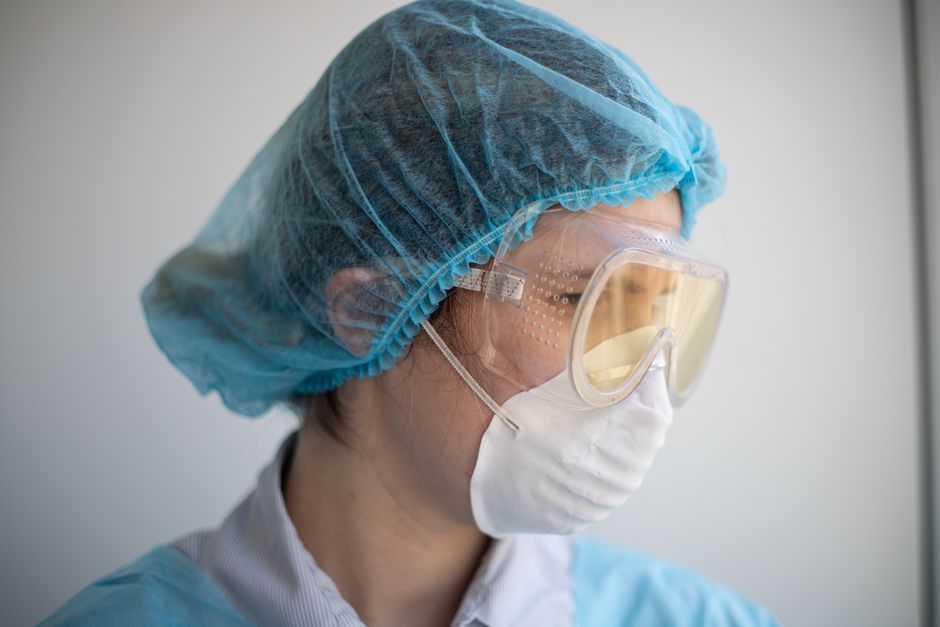
The primary reason we treat sewage as a biohazard is the sheer volume of life-threatening pathogens it contains. Exposure can occur through skin contact, accidental ingestion, or even inhalation of aerosolized droplets.
According to industry health data from the Centers for Disease Control and Prevention (CDC), raw sewage can harbor:
E. Coli: Causes severe abdominal cramps, bloody diarrhea, and vomiting.
Salmonella: Leads to typhoid fever and extreme gastrointestinal distress.
Hepatitis B & C: Viral infections that attack the liver and can survive on surfaces for days.
MRSA: A staph bacteria that is resistant to many antibiotics and can cause life-threatening skin and blood infections.
Tetanus: Often found in the soil and debris mixed with sewage water.
Airborne and Contact Dangers
Many homeowners don't realize that you don't have to touch the water to get sick. As sewage dries, organic matter becomes aerosolized. These tiny particles float through the air and can be inhaled, leading to severe respiratory distress or chronic lung issues. Furthermore, sewage often contains household chemicals, solvents, and fuels swept up from the streets, which can cause chemical burns or toxic reactions upon skin contact. Parasites, such as Giardia and Cryptosporidium, are also common in sewage and can cause long-term digestive ailments.
Long-term Property Hazards
If the biohazard sewage cleanup Atlanta experts provide is skipped or done poorly, the property remains under threat:
Mold Growth: Georgia's humidity is the perfect fuel for mold. Once organic material (sewage) meets moisture, mold spores can colonize in less than 48 hours.
Persistent Odors: The "sewage smell" isn't just unpleasant; it’s the scent of off-gassing bacteria. If not neutralized at the molecular level, this odor can settle into the framing of the house forever.
Wood Rot and Electrical Hazards: Saturated wood loses its load-bearing capacity. Additionally, sewage is highly conductive; it can ruin electrical systems and create fire hazards behind walls.
The Professional Process for Biohazard Sewage Cleanup Atlanta
When we arrive at an Atlanta property, we follow a rigorous, multi-stage protocol to ensure total decontamination. This isn't just about removing the water; it's about restoring a healthy environment.
The 5-Step Professional Protocol:
Site Assessment: We identify the "Category" and "Class" of the water damage and map the moisture migration.
Containment: We establish critical barriers using heavy-duty plastic sheeting and negative air pressure to ensure no contaminants escape the affected zone.
Bulk Extraction: Using truck-mounted vacuum systems, we remove the standing waste and "sludge."
Decontamination: We apply EPA-registered disinfectants to all surfaces.
Structural Drying: We use industrial-strength dehumidifiers to pull deep-seated moisture out of the building's skeleton.
Comparing Remediation Methods
Feature DIY Cleaning Professional Remediation (ProShield 24/7) PPE Often just gloves/mask Full-body Tyvek, Nitrile gloves, Full-face respirators Disinfectants Household bleach (ineffective on porous) EPA-registered hospital-grade biocides Porous Materials Attempted cleaning (dangerous) Controlled removal and safe disposal Hidden Moisture Ignored Located with infrared and moisture probes Air Quality Not addressed HEPA air scrubbing and hydroxyl generators
Decontamination and Sanitization Protocols
We treat every surface with a "soak and scrub" method. For non-porous materials like tile or concrete, we use high-pressure washing combined with antimicrobial treatments. However, porous materials like carpet, padding, and upholstered furniture are almost always unsalvageable after a Category 3 event. These items act like a sponge for pathogens and must be removed, double-bagged, and disposed of as biohazardous waste according to Georgia state regulations.
Structural Drying and Final Inspection
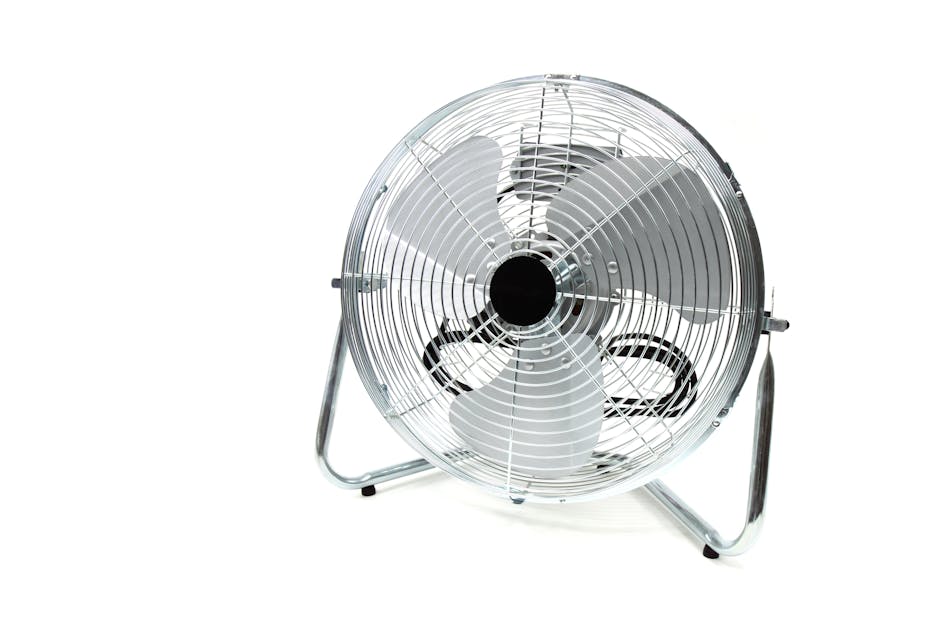
Once the area is sanitized, the "Dry Out" begins. We don't just use fans; we use high-velocity air movers and LGR (Low Grain Refrigerant) dehumidifiers. We monitor the progress daily, documenting the "drying strings" to prove the house has reached its dry standard. In complex cases, we may recommend third-party Certified Industrial Hygienist (CIH) clearance testing to provide a "clean bill of health" for the property.
Insurance Claims and Emergency Response in the Metro Area
A sewage backup is a stressful, emotional event. The last thing you want to do is fight with an insurance company. Because we provide biohazard sewage cleanup Atlanta residents trust, we have extensive experience working with major carriers.
Navigating Coverage for Biohazard Events
It is important to understand that sewage backup coverage is often an "endorsement" or "rider" on a standard homeowners policy.
Sudden vs. Gradual: Insurance typically covers sudden pipe bursts or backups. They may deny claims if the damage is deemed a result of long-term neglect (like a slow leak you ignored for months).
Documentation is King: We take hundreds of photos and detailed moisture readings. This "Proof of Loss" is vital for getting your claim approved quickly.
Direct Coordination: We can work directly with your adjuster, providing them with the professional estimates and industry-standard "Xactimate" billing they require.
Service Areas and Local Availability
We know that in a biohazard emergency, every minute matters. We provide rapid dispatch to the entire Metro Atlanta area, including:
Buckhead & Midtown: High-density areas where aging infrastructure is a common issue.
Sandy Springs & Dunwoody: Residential areas often affected by large tree root intrusions.
Marietta & Smyrna: Rapidly growing suburbs where new construction can sometimes stress existing sewer lines.
Alpharetta & Roswell: Areas where we frequently handle both residential and large-scale commercial sewage failures.
Frequently Asked Questions about Sewage Remediation
Why is sewage considered a biohazard?
Sewage is classified as a biohazard because it contains "living" threats. This includes bacteria, viruses, fungi, and parasites. Unlike "clean" water, sewage continues to become more dangerous the longer it sits, as the microbial population doubles every few hours. It also releases toxic gases like methane and hydrogen sulfide, which can be lethal in enclosed spaces like basements.
Can I save my carpets after a sewage backup?
In almost all cases, no. Carpet and the padding underneath are highly porous. Pathogens get trapped deep within the fibers and the foam. Even if the carpet looks clean, the bio-contaminants remain trapped. For the safety of your family and pets, the IICRC standards dictate that carpet saturated with Category 3 water must be replaced.
How quickly should I call for professional help?
You should call within the first hour of discovery. You have a 24-hour window before the damage escalates from a "cleanup" to a full-scale "mold remediation" project. Immediate response allows us to extract the water before it wicks high into the drywall, potentially saving you thousands of dollars in reconstruction costs.
Conclusion
Dealing with a sewage backup is overwhelming, but you don't have to face it alone. At ProShield 24/7, we specialize in the heavy lifting, the deep cleaning, and the technical drying required to make your home safe again. Our fast local dispatch ensures that a team of experts is on-site with professional drying equipment before the situation gets out of hand.
We are committed to the Atlanta community, treating every home as if it were our own. From the first extraction to the final sanitization, we handle the biohazards so you can focus on getting your life back to normal.
If you are facing a sewage emergency or need a professional assessment, don't wait for the pathogens to spread. More info about our restoration services can be found here.
Call ProShield 24/7 today—we're ready to help you restore your peace of mind.
