
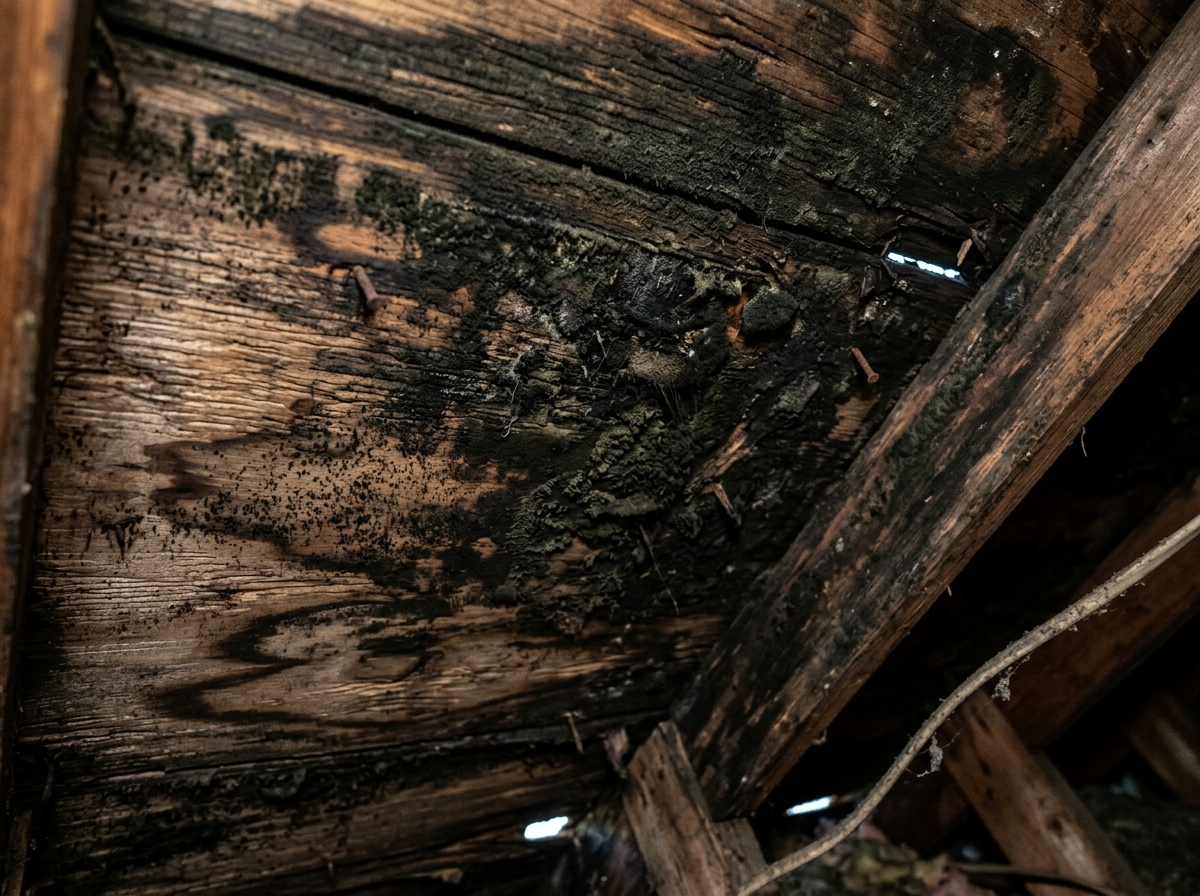
The Essential Checklist for Black Mold Attic Removal
Black Mold in Your Attic? Here's What to Do First
Black mold attic removal is urgent — and if you've just discovered dark, slimy patches on your roof sheathing or caught a musty smell drifting down from above, you're in the right place.
Here's a quick overview of what the process looks like:
Assess the extent - Determine how much surface area is affected (under 30 sq ft may be DIY-manageable)
Gear up - N95 respirator, Tyvek suit, nitrile gloves, and safety goggles are non-negotiable
Set up containment - Use 6-mil poly sheeting and negative air pressure to stop spores from spreading
Remove contaminated materials - Bag and seal moldy insulation for proper disposal
Treat structural surfaces - Apply an EPA-registered antimicrobial (borax solution or Concrobium, not bleach) to wood
HEPA vacuum - Capture dead spores after treatment dries
Fix the moisture source - Poor ventilation, roof leaks, or misdirected exhaust fans must be corrected or mold will return
Call a professional - If the affected area exceeds 30 sq ft, or you suspect Stachybotrys chartarum, stop and call a remediation specialist
Skipping the moisture fix is the #1 reason attic mold comes back after removal.
Finding black mold in your attic can feel alarming. But the danger isn't just what you can see — it's what you can't. Mold spores are microscopic. They travel through ceiling gaps, HVAC systems, and attic hatches, quietly lowering the air quality throughout your entire home.
The stakes are real. Untreated attic mold can cause respiratory problems, trigger allergic reactions, and — over time — weaken the structural wood it grows on. For families in Georgia, where humidity levels make moisture problems worse, the risk of rapid mold spread is even higher.
The good news? With the right checklist, you can tackle this systematically — whether you're doing it yourself or preparing to call in a pro.
Identifying Black Mold vs. Common Attic Staining
Not every dark spot in your attic is the "toxic black mold" everyone fears. However, knowing the difference is crucial for your safety and your wallet. In Georgia's humid climate, attics often host a variety of fungi, but Stachybotrys chartarum (the infamous black mold) has very specific characteristics.
Is it Mold or Just a Stain?
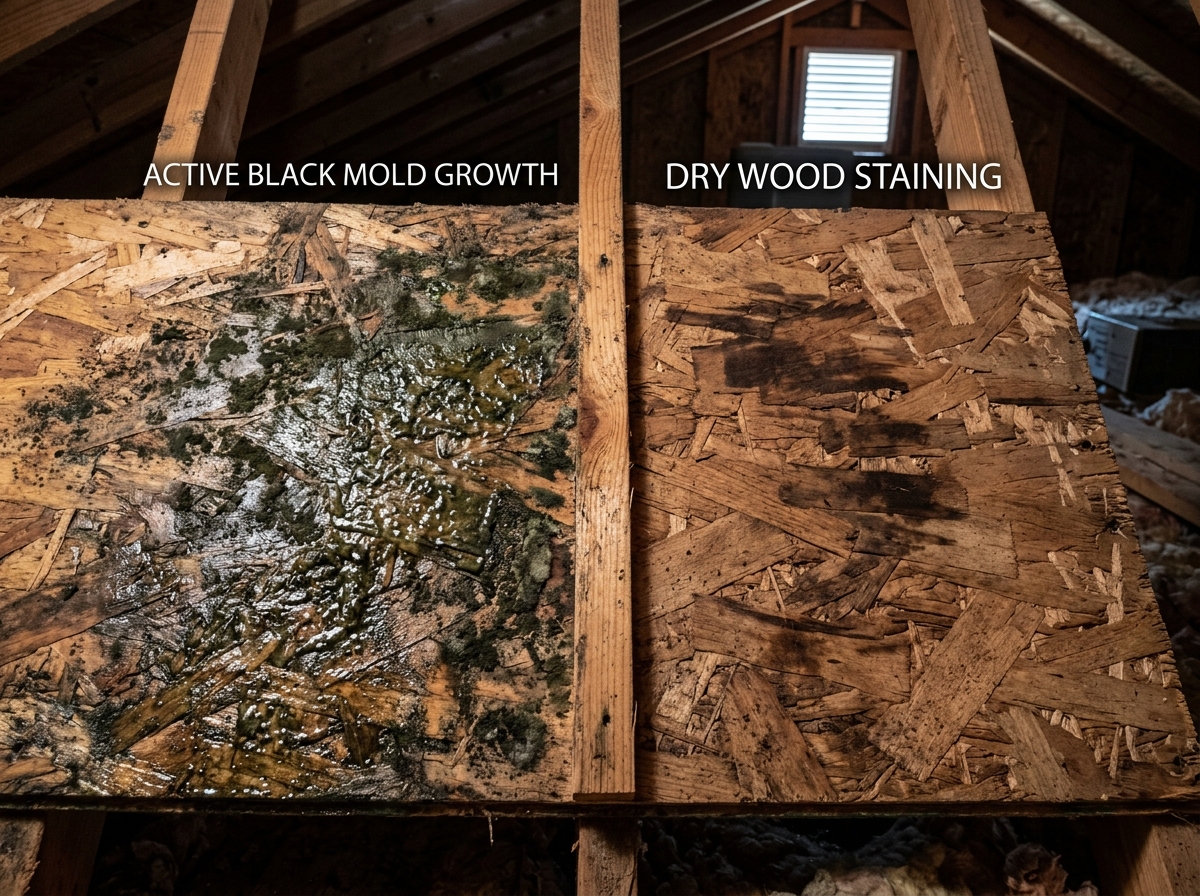
Texture Analysis: True black mold often looks slimy or wet when active. If it has dried out, it may appear soot-like or powdery. In contrast, common wood staining (often from old roof leaks or tannins in the wood) is flat, lacks texture, and won't "smudge" or wipe off.
Color: While Stachybotrys is typically a dark greenish-black, other molds like Aspergillus or Cladosporium can also appear dark. Staining is usually a consistent brown or grey.
Musty Odors: If you open your attic hatch and get hit with an earthy, "wet basement" smell, you’re likely dealing with microbial volatile organic compounds (mVOCs). This is a surefire sign of active growth.
Structural Clues: Check for wood rot or delaminating plywood. If the wood feels soft or spongy when poked with a screwdriver, the mold has likely moved beyond the surface and is compromising the structural integrity of your rafters.
We always recommend using a moisture meter. If your attic wood shows a moisture content above 19%, it is actively supporting mold colonization. At this point, the "stain" is almost certainly a growing colony.
Step-by-Step Guide to Black Mold Attic Removal
If you’ve determined the area is small enough for a DIY attempt (typically under 10–30 square feet), you must follow a strict protocol to avoid cross-contaminating your living space.
1. Establish Containment
Before you touch a single spore, you must isolate the attic. We use 6-mil polyethylene sheeting to seal off the attic hatch and any vents that lead into the house. If possible, set up a "negative air" environment by placing a fan in an attic window blowing outward, ensuring air only flows from the house into the attic and out through the roof.
2. Remove Porous Materials
Moldy insulation is a lost cause. Because fiberglass and cellulose are highly porous, they trap mycotoxins and spores deep within their fibers. Bag these materials in heavy-duty 6-mil bags while still inside the attic, seal them with duct tape, and wipe down the exterior of the bags before moving them through your home.
3. Mechanical Cleaning and Treatment
For the wood surfaces (rafters and sheathing), you need to physically remove the mold mass. This involves wire brushing or light sanding. Never do this without a HEPA vacuum running simultaneously to catch the dust.
Once the surface is clear, apply a biocide. We strongly advise against using bleach on wood.
Feature Bleach Borax / Concrobium Penetration Stays on surface; water component soaks in. Penetrates deep into wood fibers. Effectiveness Can actually "feed" mold roots with water. Kills the roots and prevents regrowth. Toxicity Harsh fumes; damages wood fibers. Low toxicity; safe for structural wood.
4. Encapsulation
After the wood has dried completely (moisture levels below 15%), we often apply a mold-resistant encapsulant. This is a specialized "paint" that seals any remaining microscopic spores and provides a physical barrier against future moisture.
Essential PPE for Black Mold Attic Removal
Safety is the most overlooked part of black mold attic removal. You aren't just protecting yourself from a smell; you're protecting your lungs from microscopic fragments that can cause long-term health issues.
Respirator: An N95 is the bare minimum, but for black mold, we recommend a full-face respirator with P100 filters. These capture 99.97% of particles down to 0.3 microns.
Tyvek Coveralls: Wear a disposable suit with a hood. This prevents spores from hitching a ride on your clothes and spreading into your carpet or furniture later.
Gloves and Goggles: Use nitrile gloves (taped to the sleeves of your suit) and unvented goggles to protect your eyes from irritation.
Best Products for Treating Moldy Wood
When we treat attics in Georgia, we look for products that offer "tri-salt" technology. These solutions work by crushing the mold spores as they dry, ensuring they cannot remain viable.
Botanical Biocides: Products containing thymol (derived from thyme oil) are excellent for those who want a non-toxic but "industrial-strength" result.
Concrobium: This is a gold standard for DIY and pros alike because it encapsulates the mold as it kills it.
HEPA Filtration: No product is a substitute for a HEPA vacuum. You must physically remove the "corpses" of the mold spores, as even dead mold can trigger allergic reactions.
When to Hire a Professional for Remediation
Sometimes, a weekend DIY project isn't enough. There are clear thresholds where professional black mold attic removal becomes a necessity for your safety.
The 10-Square-Foot Rule: The Environmental Protection Agency (EPA) suggests that any mold growth covering more than 10 square feet (about the size of a standard bath towel) should be handled by professionals.
Structural Damage: If the plywood is delaminating or rafters are soft, you need a team that can handle both remediation and structural repair.
HVAC Contamination: If you see mold growing near your AC unit or inside the ducts in the attic, the spores are being pumped into every room of your house. This requires specialized duct cleaning.
Health Sensitivities: If anyone in the home has asthma, allergies, or a weakened immune system, don't risk a DIY job.
Professional teams like ours follow IICRC S520 standards, which include third-party Post-Remediation Verification (PRV). This ensures that air sampling proves the house is safe before we tear down the containment.
Cost Factors for Professional Black Mold Attic Removal
Homeowners in Georgia typically pay between $1,200 and $3,750 for attic remediation, with the average landing around $2,300.
Square Footage: The larger the area, the more labor and chemicals required.
Soda Blasting: For extreme cases, we use soda blasting (compressed air and baking soda) to "power wash" the mold off wood. This is highly effective but adds to the cost.
Insulation Replacement: Removing and blowing in new insulation is often a separate line item but is essential for a clean slate.
Ventilation Correction: If we don't fix why the mold grew, you're throwing money away. Adding ridge vents or baffles is a critical investment.
Fixing Root Causes and Preventing Regrowth
You could spend thousands on removal, but if your attic is still a "sauna," the mold will be back in six months. Prevention is all about moisture control.
Rafter Baffles: These plastic chutes ensure that your insulation doesn't block the "intake" air coming from your soffit vents.
Exhaust Fan Ducting: This is the #1 cause of attic mold we see in Georgia. Bathroom fans must vent all the way outside through the roof or a side wall. If they dump into the attic, you are literally pumping steam into your wood.
Ridge Vents: A balanced system needs intake (soffits) and exhaust (ridge vents). This creates a "chimney effect" that pulls moisture out.
Air Sealing: Seal the gaps around light fixtures and plumbing pipes in your ceiling. This stops the warm, humid air from your kitchen and bath from rising into the attic (the "stack effect").
Frequently Asked Questions about Attic Mold
What causes black mold to grow in an attic?
The primary drivers are roof leaks and poor ventilation. In the winter, warm air from your house hits the cold underside of the roof, creating condensation. In the summer, Georgia's high humidity gets trapped in the attic if there isn't enough airflow. Both scenarios provide the "drink" mold needs to grow.
Is it safe to live in a house with black mold in the attic?
It depends on the "stack effect." Because warm air rises and escapes through the roof, it creates a vacuum that pulls air from the attic down into the living space through recessed lights and wire penetrations. If you have a large infestation, you are likely breathing in those spores. If you have unexplained headaches or respiratory issues, it's time for an inspection.
Should I replace or clean moldy attic insulation?
Replace it. Fiberglass and cellulose are impossible to clean effectively. Even if you kill the mold on the surface, the dead spores and mycotoxins remain trapped in the material. Replacing insulation also gives you a chance to upgrade your R-value and improve energy efficiency.
Conclusion
Black mold attic removal isn't just a cleaning chore; it's a technical restoration process. Whether you decide to tackle a small patch yourself or bring in the experts, the goal is the same: a dry, healthy home that protects your family and your property value.
At ProShield 24/7, we specialize in the unique challenges of Georgia's climate. We provide an immediate response with fast local dispatch and professional drying equipment to ensure that once the mold is gone, it stays gone. If you're worried about what's growing over your head, don't wait for the next rainstorm to make it worse.
Explore our professional mold remediation services today and breathe easier tonight.
