
When the Levee Breaks: Your Emergency Water Extraction Handbook
When Water Invades Your Home, Every Minute Counts
Emergency water extraction services are professional water removal and drying solutions that respond 24/7 to stop water damage from spreading in your home or business.
Here's what emergency water extraction typically involves:
Immediate response - Professionals arrive (often within 60 minutes) to assess the damage
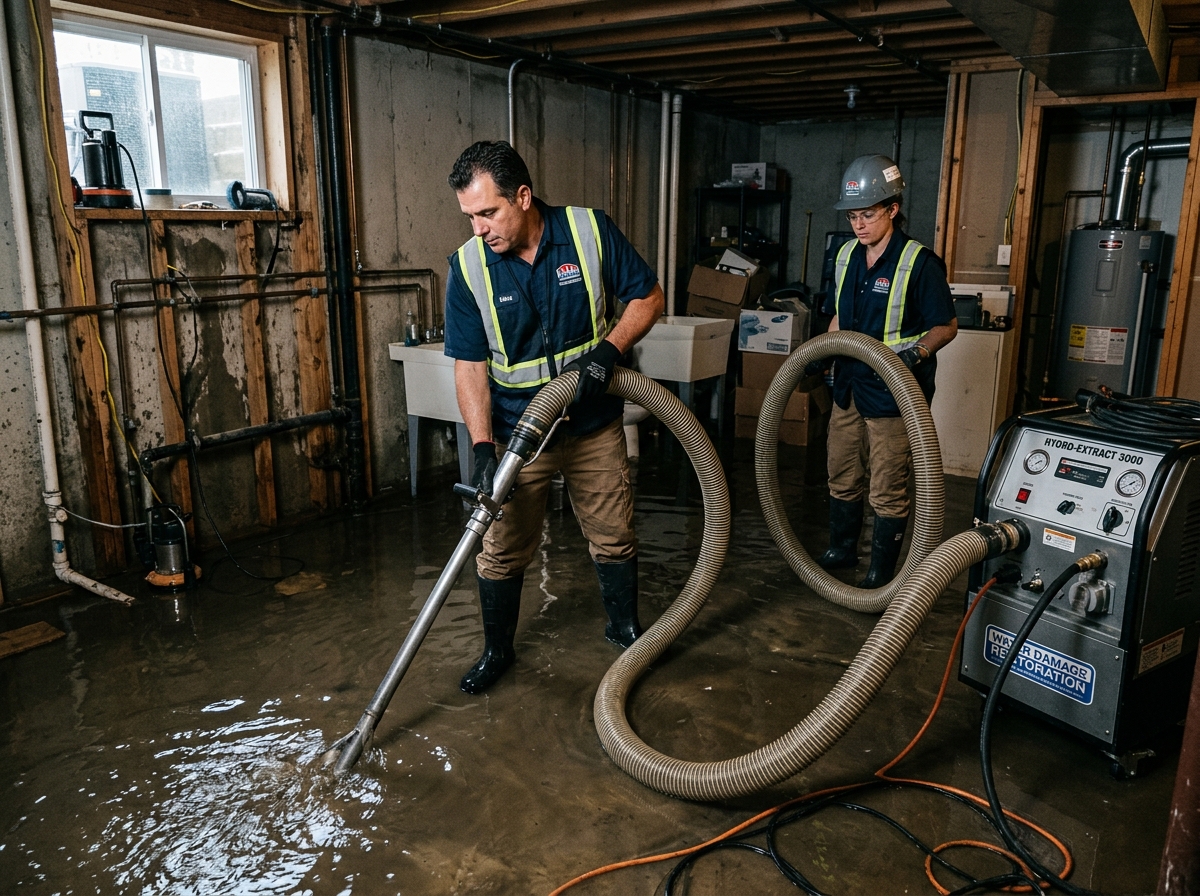
Water removal - Powerful pumps and vacuums pull out standing water fast
Moisture mapping - Infrared cameras and meters find water hiding in walls and floors
Structural drying - Industrial dehumidifiers and air movers dry out the building
Sanitization - Affected areas are cleaned and treated to prevent mold and bacteria
Restoration - Damaged materials are repaired or replaced
Water damage is one of the most stressful things a homeowner can face. One moment everything is fine. The next, you're standing in inches of water watching it creep toward your furniture, walls, and everything you own.
It's not just the visible water that's the problem. Water moves fast. Within minutes, it seeps into flooring, drywall, and insulation. Within 24 to 48 hours, mold spores can begin to grow. What starts as a burst pipe or a storm flood can quickly become a much bigger — and more expensive — disaster.
This guide walks you through exactly what emergency water extraction is, how the process works, and what you should do right now if you're dealing with water damage in your Georgia home.
The Critical Window: Why Speed is Essential
When we talk about water damage in Georgia, we aren't just talking about a puddle on the floor. We are talking about a biological clock that starts ticking the second the water hits your floorboards. In our experience, the first 24 to 48 hours are the most critical. If you miss this window, a simple "dry out" job can quickly turn into a massive reconstruction project.
The Mold Factor
Mold is the uninvited guest that refuses to leave. According to industry statistics from the EPA, mold spores can begin to colonize and grow within just 24 to 48 hours in the presence of moisture and organic material (like your drywall or wooden studs). Once mold takes hold, the complexity of the job doubles. We move from simple extraction to full-scale mold remediation, which involves containment and specialized air scrubbing.
Structural Integrity and Property Value
Water is a solvent; it wants to break things down. Within minutes of a leak, water begins seeping into walls, subfloors, and insulation. Wood swells, drywall loses its structural strength, and metal surfaces begin to tarnish. If left untreated, the very bones of your home—the wooden joists and concrete foundations—can weaken. This doesn't just look bad; it can cause your property value to plummet and make your home unsafe to inhabit.
Electrical and Health Hazards
Standing water is a massive safety risk. It is an excellent conductor of electricity, and if water reaches your outlets or electrical panel, the risk of fire or severe shock is high. Furthermore, stagnant water becomes a breeding ground for bacteria and viruses. Whether it's "clean" water from a pipe or "black" water from a sewage backup, the longer it sits, the more hazardous it becomes to your family and pets.

The Step-by-Step Process of Emergency Water Extraction Services
When you call for emergency water extraction services, you aren't just getting a guy with a shop vac. You are hiring a team of specialists who follow a rigorous, scientifically-backed process to stabilize your home. Here is how we handle the chaos:
1. Damage Assessment and Safety Check
The first thing we do upon arrival is ensure the site is safe. We check for electrical hazards and identify the source of the water. If the pipe is still gushing, we stop it. We then categorize the water (Clean, Gray, or Black) to determine the level of protective gear and sanitization needed.
2. Moisture Mapping
This is where the "invisible" damage is found. We use thermal imaging and moisture meters to see through your walls. Water often travels further than the eye can see, hiding behind baseboards or under cabinets. Mapping ensures we don't leave a single pocket of moisture behind to rot.
3. Standing Water Removal
We use powerful, truck-mounted vacuum units and submersible pumps to remove the bulk of the water. This is the "extraction" phase. Removing standing water is significantly more efficient than trying to evaporate it later. In a typical residential flood, we might remove hundreds or even thousands of gallons of water in just a few hours.
4. Structural Drying
Once the standing water is gone, the building materials are still "wet" to the touch. We deploy industrial-grade air movers and LGR (Low Grain Refrigerant) dehumidifiers. These machines pull moisture out of the air and the walls, creating a "dry vortex" that speeds up evaporation. For More info about restoration services, you can see how this phase transitions into full property recovery.
5. Sanitization and Deodorization
Water damage often leaves behind a musty smell or harmful pathogens. We apply antimicrobial treatments to kill bacteria and prevent mold growth. We also use specialized equipment like hydroxyl generators or ozone machines to neutralize odors at the molecular level.
6. Final Inspection
We don't leave until the moisture readings return to "dry standards." We monitor the drying progress daily, adjusting equipment as needed until your home is officially cleared of excess moisture.
Advanced Technology in Emergency Water Extraction Services
The days of just "opening a window" are long gone. Modern emergency water extraction services rely on high-tech tools:
Infrared Cameras: These allow us to see temperature differences. Since wet areas are cooler than dry areas, the camera shows us exactly where water is hiding behind your drywall.
Hygrometers: These measure the humidity and temperature of the air, helping us calculate the exact "vapor pressure" needed to pull water out of hardwood floors.
Moisture Probes: These are used to check the moisture content inside carpets, pads, and subfloors.
Industrial Extractors: These are much more powerful than a standard vacuum, capable of pulling water from deep within carpet fibers and upholstery.
Why Professionals Excel at Emergency Water Extraction Services
You might be tempted to rent a fan and call it a day, but professional intervention is vital for several reasons:
IICRC Certification: Professionals are trained by the Institute of Inspection Cleaning and Restoration Certification (IICRC). This means they follow global standards for safety and effectiveness.
Hidden Moisture: DIY efforts often miss water trapped in wall cavities or under floorboards, leading to "hidden mold" that appears months later.
Insurance Documentation: We provide the moisture logs, photos, and detailed reports that insurance adjusters require to process your claim quickly.
Safety Protocols: Handling sewage or contaminated water requires specific PPE (Personal Protective Equipment) and disposal methods that most homeowners don't have access to.
Categorizing the Chaos: Clean, Gray, and Black Water
Not all water is created equal. The industry divides water damage into three categories based on the level of contamination. Understanding these helps us determine the safety protocols and what materials can be saved versus what must be thrown away.
Category Type Source Health Risk Action Required Category 1 Clean Water Broken supply lines, melting snow, falling rain Low Extraction and drying; most materials salvageable. Category 2 Gray Water Dishwasher/Laundry overflow, sump pump failure Medium Contains chemical or biological contaminants; requires sanitization. Category 3 Black Water Sewage, rising river water, seawater High Highly toxic; contains bacteria and pathogens; porous materials must be removed.
Category 1 (Clean Water): This is water from a clean source, like a burst pipe or a leaky faucet. While it’s the "best" kind of leak to have, it can degrade into Category 2 or 3 if left sitting for more than 24 hours.
Category 2 (Gray Water): This water has a significant level of contamination. Think of the water that comes out of your washing machine or dishwasher. It contains soap, skin cells, and perhaps some bacteria. It can cause illness if ingested or touched.
Category 3 (Black Water): This is a true emergency. Black water comes from sewage backups or flooding from rivers and streams. It is grossly unsanitary and can contain harmful microbes, pesticides, and heavy metals. In these cases, we often have to remove drywall and carpeting entirely because they cannot be safely disinfected.
Professional Equipment and Moisture Detection
In emergency water extraction services, the equipment is the hero of the story. We use a combination of physics and heavy machinery to restore your home.
Air Movers and Dehumidifiers
Air movers don't just "blow air." They are designed to move air across the surface of wet materials at high velocity, which increases the rate of evaporation. However, all that evaporated water has to go somewhere, or the room becomes a sauna. That’s where the LGR dehumidifiers come in. They pull the moisture out of the air and pump it down a drain, keeping the "relative humidity" low enough for the materials to continue drying.
Specialized Drying Tools
Injectidry Systems: If water gets behind a kitchen cabinet or under a hardwood floor, we use these systems to push or pull air through small holes, drying the structure without having to tear out expensive cabinetry.
Hardwood Floor Mats: These specialized mats use suction to draw moisture out of the wood grains of your flooring, often saving thousands of dollars in replacement costs.
Antimicrobial Treatments: We use EPA-registered solutions that are safe for your family but tough on mold and bacteria.
Homeowner Action Plan: What to Do Immediately
If you've just discovered water in your home, stay calm. Your actions in the next 30 minutes can save you thousands of dollars.
Safety First: Do not enter a flooded room if the electricity is still on. If you can safely reach your circuit breaker, turn off the power to the affected areas.
Stop the Flow: If the water is coming from a burst pipe, shut off the main water valve immediately.
Call for Help: Contact emergency water extraction services right away. The sooner the equipment starts running, the less damage you'll have.
Protect Your Belongings: Move small items, electronics, and valuables to a dry area. For heavy furniture, place aluminum foil or wood blocks under the legs to prevent "wicking" (where wood stain bleeds into the carpet).
Document Everything: Take photos and videos of the standing water and any damaged items. This is gold for your insurance claim.
Avoid DIY Vacuums: Never use a household vacuum cleaner to suck up water. You risk electrical shock and will likely ruin the vacuum.
Optimize Airflow: If the weather is dry and the AC is still working, turn it on to help lower humidity. If it's humid outside, keep the windows closed.
Immediate Safety Checklist:
[ ] Turn off electricity in wet areas.
[ ] Shut off the main water supply.
[ ] Avoid walking on wet carpet (it spreads the water).
[ ] Do not turn on ceiling fixtures if the ceiling is wet.
[ ] Keep children and pets away from the water.
Frequently Asked Questions about Water Extraction
How long does it typically take to dry out a property?
While the actual water extraction (pumping out the standing water) usually takes just a few hours, the structural drying process is a marathon, not a sprint. On average, it takes three to five days to reach professional dry standards. Factors like the type of material (hardwood takes longer than drywall) and the local Georgia humidity can influence this timeline.
Does homeowners insurance cover emergency water extraction?
In most cases, yes—provided the damage was "sudden and accidental," like a burst pipe or a water heater failure. Most policies do not cover damage caused by lack of maintenance (a slow leak you ignored for months) or rising floodwaters unless you have specific flood insurance. We recommend calling us first so we can help document the damage correctly for your adjuster.
Can I handle water extraction as a DIY project?
For a small spill from a knocked-over bucket? Sure. But for any significant water intrusion, DIY is risky. Household fans aren't powerful enough to pull moisture from deep inside walls, and without moisture meters, you have no way of knowing if the "hidden" areas are truly dry. "Dry to the touch" does not mean "dry to the bone." Unseen moisture is the #1 cause of mold outbreaks weeks after the initial leak.
Conclusion
When it comes to water damage, there is a big difference between mitigation and restoration. Mitigation is the emergency "triage"—it's the emergency water extraction services we provide to stop the bleeding. Restoration is the "surgery" that happens later to make everything look new again. By acting fast on the mitigation side, you significantly reduce the amount of restoration needed.
Living in Georgia, we deal with everything from flash floods to high-humidity mold risks. At ProShield 24/7, we understand the local climate and the urgency of your situation. We provide immediate response with fast local dispatch and professional drying equipment to ensure your home is stabilized as quickly as possible.
Don't let a small leak turn into a structural disaster. If you're facing water damage, take a deep breath, follow the safety steps, and give us a call. We're here 24/7 to help you get your life back to normal.
For immediate assistance, visit our Emergency Water Extraction Services page and let our experts handle the rest.
