
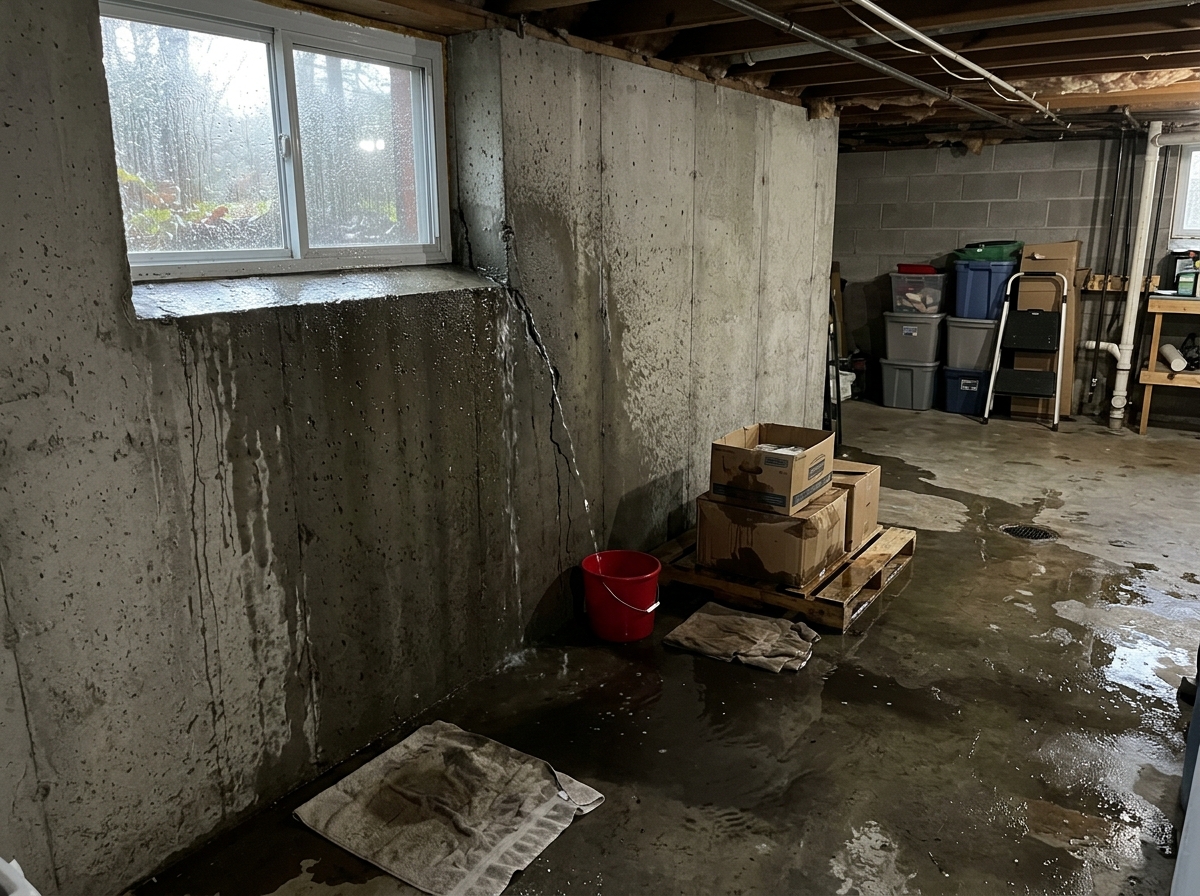
Stop the Sinking Feeling of a Flooded Basement
Your Basement Is Flooding After Rain — Here's What to Do First
Water leaking into basement after heavy rain is one of the most stressful things a homeowner can face — especially when it happens fast and you don't know where to start.
Quick answer: What to do right now
Stay safe — don't enter standing water if electrical panels or outlets are nearby
Find the source — look for cracks in walls, floor joints, or window wells
Remove water immediately — use a wet/dry vacuum, mop, or sump pump
Dry the area fast — open windows, run fans, and use a dehumidifier
Call a professional — if water is widespread, recurring, or mold is present
According to FEMA, more than 98% of basements will experience some form of water intrusion at some point. So if you've just discovered a wet basement after a storm, you're far from alone.
But here's the part that makes it urgent: mold can begin growing within just 24 to 48 hours after water gets in. In Georgia's humid climate, that window is even tighter.
One new homeowner described the experience perfectly: she bought her house in January, and after the first heavy weekend of rain, she came downstairs to find water in her basement — with no idea whether it was a small problem or a serious one.
That uncertainty is exactly what makes basement leaks so overwhelming. The good news? Most causes are identifiable, and most fixes are actionable — once you know what you're dealing with.
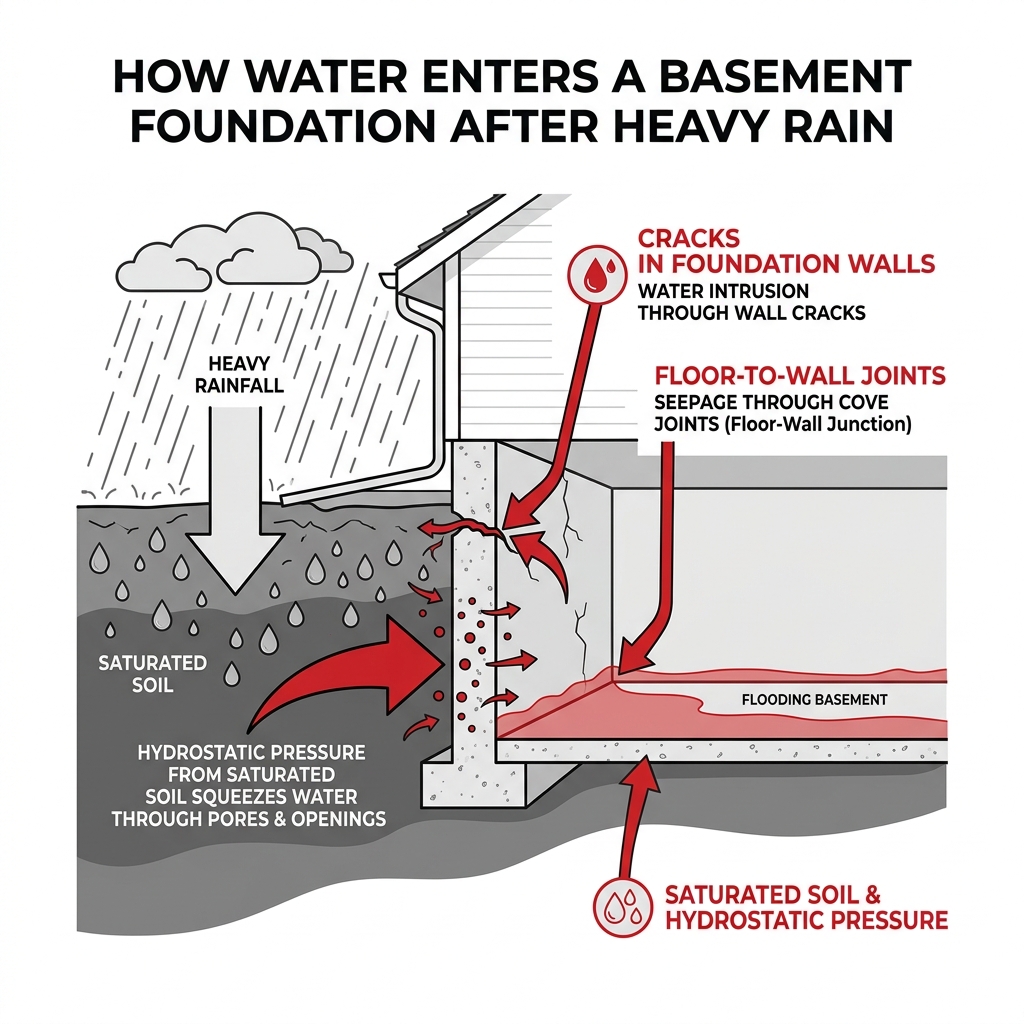
Common Causes of water leaking into basement after heavy rain
When the clouds open up over Georgia and the rain starts pouring, your basement is essentially sitting in a giant, wet sponge. Understanding why water chooses your basement as its personal swimming pool is the first step toward stopping it.
The most common culprit is hydrostatic pressure. Think of it like this: as the soil around your home becomes saturated with water, it gets heavy—really heavy. Saturated soil can exert up to 5,000 pounds of pressure per square foot against your foundation walls. This immense force literally squeezes water through tiny pores in the concrete, hairline cracks, or the joints where your walls meet the floor.
Then there is the clay bowl effect. When your home was built, the contractors dug a hole larger than the foundation, then filled the extra space with "backfill" soil. This backfill is often looser and more porous than the undisturbed, hard-packed Georgia clay further out. During a storm, this loose soil acts like a bowl, trapping water right against your foundation. Instead of draining away, the water sits there, building up lateral pressure until it finds a way inside.
The Impact of Soil and Grading
In Georgia, we deal with a lot of red clay. While it’s great for pottery, it’s a bit of a nightmare for drainage. Clay is an "expansive" soil, meaning it swells when wet and shrinks when dry. This constant movement can cause your foundation to shift and crack over time, creating perfect entry points for water leaking into basement after heavy rain.
However, the biggest factor we see is negative grading. This is a fancy way of saying your yard slopes toward your house instead of away from it. If your lawn looks like a funnel leading to your foundation, you’re essentially inviting the rain to come inside.
The good news? Industry experts agree that 9 out of 10 times, basement water issues can be resolved or significantly improved by simply correcting the grading around the dwelling and redirecting rain gutter water. We recommend a slope of at least one inch of drop for every foot of distance away from the house, for at least the first ten feet.
Common Soil Drainage Characteristics:
Sand: Drains quickly, low pressure.
Silt: Moderate drainage, can retain some moisture.
Georgia Clay: Drains slowly, high expansion, high hydrostatic pressure.
Gutter and Downspout Failures
Your roof is a massive water collection surface. A single inch of rain on a 2,000-square-foot roof produces about 1,250 gallons of water. If your gutters are clogged with pine needles and leaves, that water doesn't go into the downspouts—it pours over the sides like a waterfall, landing right at the base of your foundation.
Even if your gutters are clean, short downspouts can be just as dangerous. If your downspouts dump water only a foot or two from the wall, you are just recycling that water back into the "clay bowl" we mentioned earlier. We follow the 5-10 foot rule: downspouts should discharge water at least 5 to 10 feet away from the foundation to ensure it doesn't just seep right back down into your basement.
How to Identify and Diagnose the Source
Finding the leak is a bit like being a detective. Water is sneaky; it can enter at one spot and travel along a floor joist or behind a wall before appearing ten feet away.
One of the most common signs of a long-term moisture issue is efflorescence. If you see a white, chalky, or powdery substance on your basement walls, that’s not mold—it’s salt. As water passes through the concrete, it dissolves minerals. When the water evaporates on the inside, it leaves the minerals behind. It’s a "smoking gun" that moisture is moving through your walls.
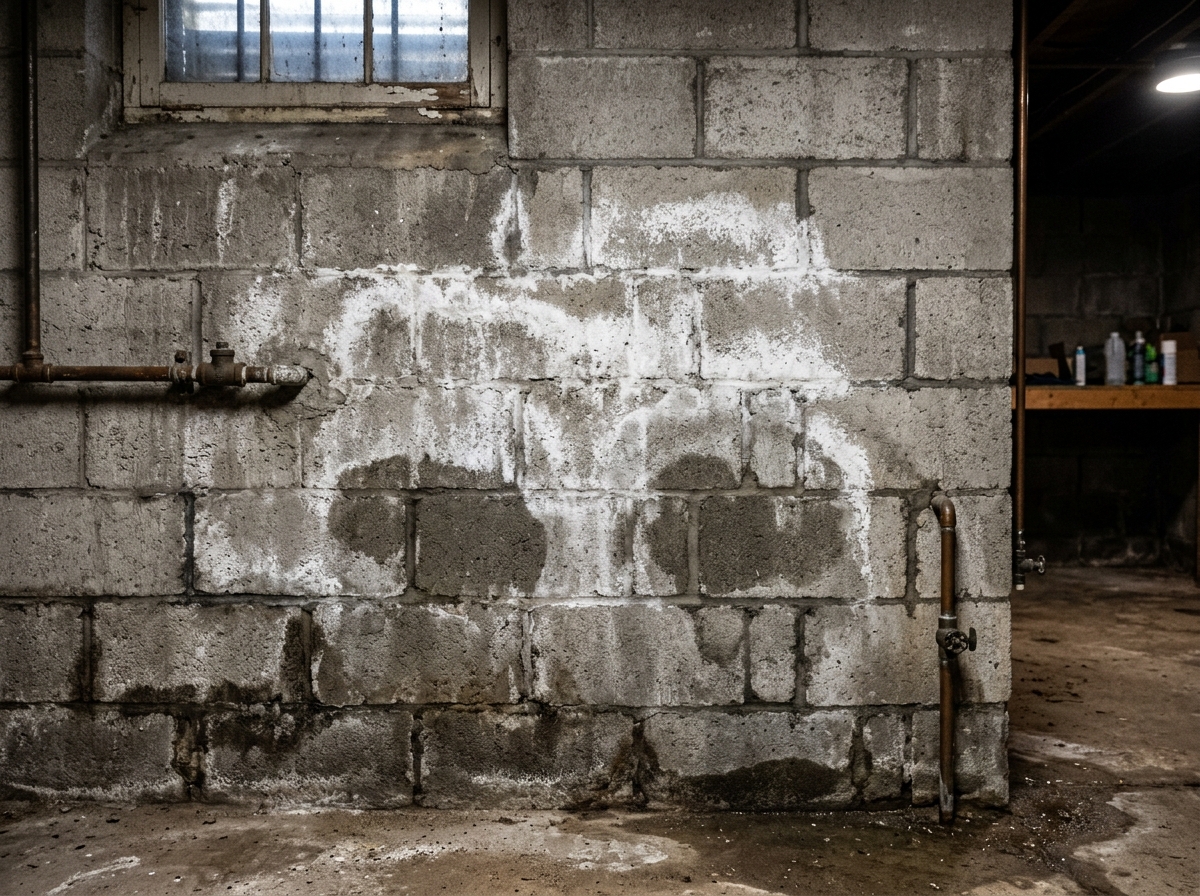
During your visual inspection, look for:
Damp spots or discoloration on the concrete.
Musty odors that get stronger after a storm.
Peeling paint or bubbling wallpaper, which suggests moisture is trapped behind the finish.
Rust at the base of metal appliances or floor jacks.
Identifying water leaking into basement after heavy rain by Pattern
The location of the water often tells us exactly what’s wrong:
Water at the base of the wall (Cove Joint): This is the most common entry point. The "cove joint" is where the wall and floor meet. Since they were poured at different times, there is a tiny gap. Hydrostatic pressure pushes water through this seam.
Water rising through floor cracks: This usually indicates a high water table. If the ground underneath your house is saturated, the water has nowhere to go but up.
Water dripping down the middle of a wall: This points to a crack in the foundation wall or a failure in the exterior waterproofing membrane.
Water around windows: If you have basement windows, check the window wells. If they don't have proper drainage or covers, they can fill up like a fish tank until the pressure breaks the window seal.
Weeping masonry: In older Georgia homes with brick or cinder block foundations, the blocks themselves can become saturated and "weep" moisture through the porous material.
Signs of Structural Foundation Stress
Sometimes, water leaking into basement after heavy rain is a symptom of a larger structural problem. Water weakens the soil under your home, which can lead to foundation settling.
Keep an eye out for these "red flags":
Sticking doors or windows: If they suddenly become hard to open or close after a heavy rain, your foundation may be shifting.
Horizontal cracks: Vertical cracks are often just from settling, but horizontal cracks are more serious—they suggest the soil pressure is literally pushing the wall inward.
Bowed walls: If the wall looks like it’s leaning or curving inward, you need a professional assessment immediately.
The 1/8 inch rule: Any crack wider than 1/8 of an inch, or one that is actively growing, is a cause for concern.
Effective Solutions and Preventative Measures
Once you've diagnosed the problem, it's time to fix it. Solutions generally fall into two categories: keeping water out (exterior) or managing water once it gets in (interior).
Solution Best For Cost Range Pros Cons Regrading Surface runoff $500 - $2,500 Inexpensive, DIY-friendly Doesn't fix high water tables Crack Injection Specific wall cracks $250 - $800 Fast, effective for leaks Doesn't fix structural issues Interior Drainage Hydrostatic pressure $5,000 - $15,000 Very reliable, stays dry Requires breaking concrete Exterior Waterproofing Total protection $10,000 - $30,000 Stops water before entry Very invasive/expensive
For small, non-structural cracks, homeowners can often use hydraulic cement or epoxy injection kits. These materials expand as they cure, creating a tight seal that can withstand some water pressure. However, keep in mind that if you don't fix the drainage issue outside, the pressure will eventually find a new way in.
Exterior Drainage and Window Wells
The best defense is a good offense. French drains are a classic and effective solution. These involve digging a trench around the perimeter, laying a perforated pipe in a bed of gravel, and covering it with soil. This gives groundwater a "path of least resistance" to follow away from your home.
Don't forget the windows! Installing window well covers is a simple, low-cost way to keep rain and debris out. Ensure the bottom of the well has 4 to 6 inches of fresh gravel to help any stray water drain into the soil rather than through your window pane.
Interior Water Management Systems
If your home is in a low-lying area of Georgia with a high water table, you might need an interior system. This involves cutting a channel into the floor around the perimeter (interior drain tile) that leads to a sump pump.
The sump pump is your basement's heart. When water reaches a certain level in the pit, the pump kicks on and flushes the water out and away from the house. We always recommend a battery backup for your sump pump. In Georgia, heavy rain often comes with thunderstorms that knock out the power—the exact moment you need your pump the most!
Finally, manage the air. Even if you stop the liquid water, damp basements are breeding grounds for mold. We recommend keeping your indoor humidity between 30% and 50%. A professional-grade dehumidifier is often necessary to reach these levels in the humid South.
Frequently Asked Questions
How much does it cost to fix a basement leak?
The cost varies wildly based on the severity. A simple crack repair might cost between $250 and $800. However, if you need a full professional interior French drain system, you could be looking at $5,000 to $18,000. On average, most homeowners spend between $500 and $10,000 to resolve their water issues. While it’s a significant investment, it’s worth noting that a wet basement can reduce your property value by 10% to 20%.
Will homeowners insurance cover basement flooding?
This is a tricky one. Standard homeowner policies usually cover "sudden and accidental" water damage, like a burst pipe. However, they typically do not cover damage caused by "seepage" or "neglect"—which is how many insurance companies categorize water leaking into basement after heavy rain. If the water comes from the ground up (flooding), you usually need a separate flood insurance rider. Always document the damage with photos and call your agent to clarify your specific coverage.
Professional Help for water leaking into basement after heavy rain
When is it time to put down the mop and call in the pros? We suggest calling us if:
You have recurring leaks that DIY fixes haven't stopped.
You see visible mold growth (especially over a large area).
You notice structural cracks (horizontal or wider than 1/8 inch).
The water is too deep to handle with a standard shop-vac.
At ProShield 24/7, we follow IICRC standards for water restoration. This means we don't just "dry" the floor; we use professional-grade moisture meters and thermal imaging to ensure the water hasn't soaked into the wall studs or under the flooring, where it can rot your home from the inside out.
Conclusion
Finding water leaking into basement after heavy rain is a "sinking feeling," but it doesn't have to be a disaster. By understanding hydrostatic pressure, maintaining your gutters, and ensuring your yard slopes away from your foundation, you can keep your home dry and your foundation strong.
If the storm has already done its damage, don't wait for the mold to move in. ProShield 24/7 is here to help Georgia homeowners recover. We provide 24/7 emergency water extraction, professional drying, and mold remediation with fast local dispatch. We’ll bring the heavy-duty equipment and the expertise needed to get your basement—and your peace of mind—back to normal.
